
- CLASSIC MAGAZINES
- REVIEW CREW
A show recapping what critics thought back
when classic games first came out! - NEXT GENERATION'S BEST & WORST
From the worst 1-star reviews to the best
5-stars can offer, this is Next Generation! - NINTENDO POWER (ARCHIVE)
Experience a variety of shows looking at the
often baffling history of Nintendo Power! - MAGAZINE RETROSPECTIVE
We're looking at the absolutely true history of
some of the most iconic game magazines ever! - SUPER PLAY'S TOP 600
The longest and most ambitious Super NES
countdown on the internet! - THEY SAID WHAT?
Debunking predictions and gossip found
in classic video game magazines! - NEXT GENERATION UNCOVERED
Cyril is back in this spin-off series, featuring the
cover critic review the art of Next Generation! - HARDCORE GAMER MAGAZING (PDF ISSUES)
Download all 36 issues of Hardcore Gamer
Magazine and relive the fun in PDF form!
- REVIEW CREW
- REVIEW ARCHIVE
- ELECTRONIC GAMING MONTHLY
- ELECTRONIC GAMING MONTHLY RANKS
From Mario to Sonic to Street Fighter, EGM
ranks classic game franchises and consoles! - ELECTRONIC GAMING MONTHLY BEST & WORST
Counting down EGM’s best and worst reviews
going year by year, from 1989 – 2009! - ELECTRONIC GAMING BEST & WORST AWARDS
11-part video series chronicling the ups and
downs of EGM’s Best & Worst Awards!
- ELECTRONIC GAMING MONTHLY RANKS
- GAME HISTORY
- GAME OVER: STORY BREAKDOWNS
Long-running series breaking down game
stories and analyzing their endings! - A BRIEF HISTORY OF GAMING w/ [NAME HERE]
Real history presented in a fun and pithy
format from a variety of game historians! - THE BLACK SHEEP
A series looking back at the black sheep
entries in popular game franchises! - INSTANT EXPERT
Everything you could possibly want to know
about a wide variety of gaming topics! - FREEZE FRAME
When something familiar happens in the games
industry, we're there to take a picture! - I'VE GOT YOUR NUMBER
Learn real video game history through a series
of number-themed episodes, starting at zero! - GREAT MOMENTS IN BAD ACTING
A joyous celebration of some of gaming's
absolute worst voice acting!
- GAME OVER: STORY BREAKDOWNS
- POPULAR SERIES
- DG NEWS w/ LORNE RISELEY
Newsman Lorne Riseley hosts a regular
series looking at the hottest gaming news! - REVIEW REWIND
Cyril replays a game he reviewed 10+ years
ago to see if he got it right or wrong! - ON-RUNNING FEUDS
Defunct Games' longest-running show, with
editorials, observations and other fun oddities! - DEFUNCT GAMES QUIZ (ARCHIVE)
From online quizzes to game shows, we're
putting your video game knowledge to the test!- QUIZ: ONLINE PASS
Take a weekly quiz to see how well you know
the news and current gaming events! - QUIZ: KNOW THE GAME
One-on-one quiz show where contestants
find out if they actually know classic games! - QUIZ: THE LEADERBOARD
Can you guess the game based on the classic
review? Find out with The Leaderboard!
- QUIZ: ONLINE PASS
- DEFUNCT GAMES VS.
Cyril and the Defunct Games staff isn't afraid
to choose their favorite games and more! - CYRIL READS WORLDS OF POWER
Defunct Games recreates classic game
novelizations through the audio book format!
- DG NEWS w/ LORNE RISELEY
- COMEDY
- GAME EXPECTANCY
How long will your favorite hero live? We crunch
the numbers in this series about dying! - VIDEO GAME ADVICE
Famous game characters answer real personal
advice questions with a humorous slant! - FAKE GAMES: GUERILLA SCRAPBOOK
A long-running series about fake games and
the people who love them (covers included)! - WORST GAME EVER
A contest that attempts to create the worst
video game ever made, complete with covers! - LEVEL 1 STORIES
Literature based on the first stages of some
of your favorite classic video games! - THE COVER CRITIC
One of Defunct Games' earliest shows, Cover
Critic digs up some of the worst box art ever! - COMMERCIAL BREAK
Take a trip through some of the best and
worst video game advertisements of all time! - COMIC BOOK MODS
You've never seen comics like this before.
A curious mix of rewritten video game comics!
- GAME EXPECTANCY
- FULL ARCHIVE
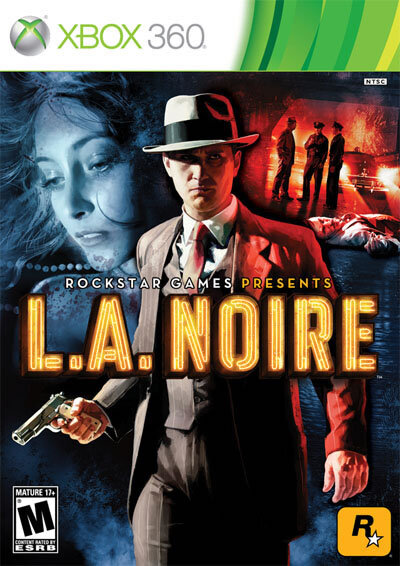
L.A. Noire
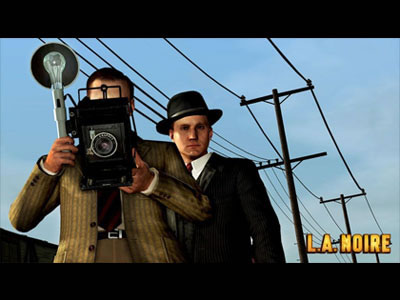
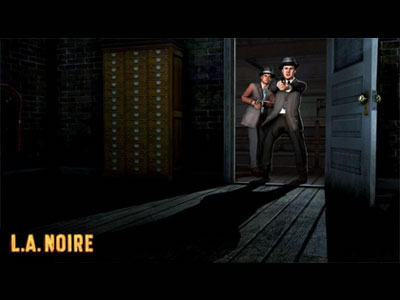
At first glance you may mistake Rockstar Games' newest open-world game has nothing more than another Grand Theft Auto clone. But look closer, because Team Bondi's newest game has very little to do with Jack Thompson's least favorite franchise. With its slow pace, emphasis on characters and graphic adventure roots, L.A. Noire feels more like Sam & Max than Grand Theft Auto. But the rich blend of police procedural and intelligent writing has not only led to the most impressive game of the year, but also one of the very best titles Rockstar Games has published.
L.A. Noire tells the story of Cole Phelps, a World War II veteran who attempts to make a name for himself as a Los Angeles police officer. This is the story of a man working his way up through the ranks, from a street officer to a traffic cop to a homicide detective and beyond. Over the course of 21 individual cases, Cole fights for the truth and learns a few things about himself along the way.
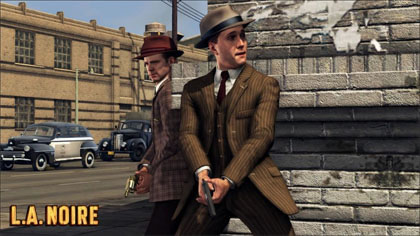
Cole is not your usual Rockstar Games protagonist. He's not motivated by the darker elements of our society; instead he plays by the rules and investigates each case with the by-the-books gumption you expect from a straight-laced cop in the 1940s. Fans of Dragnet and other similar crime shows will appreciate Cole's no-nonsense approach to solving crimes, something you certainly didn't see much of in Grand Theft Auto IV or Red Dead Redemption.
With the change of protagonist comes a definite shift in tone and pacing. This is not the fast-paced action game that GTA was. Instead we're given a methodical adventure game that rewards players who pay close attention to the smallest of details. Heck, most of the time Cole can't even fire a bullet, let alone unleash the type of hell Niko Bellic was known for. If that's the kind of thing you're looking for, then perhaps you should pick up Mafia II or the upcoming Saints Row game. Everybody else should strap themselves in for a non-traditional graphic adventure game on the grandest of scales.
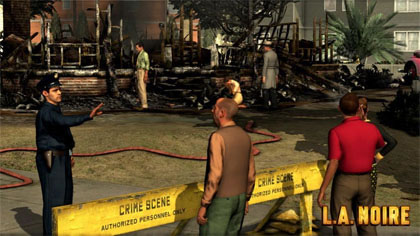
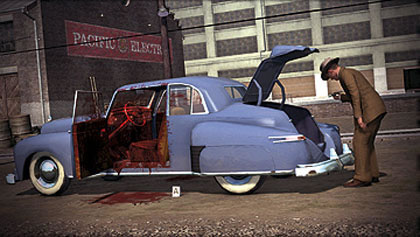
L.A. Noire mixes several disparate gameplay mechanics together to create one of the most impressive cop simulators of all time. Often times a case will start with you (and one of your various partners) investigating a crime scene for clues. This is done by you slowly walking around, interacting with items, gathering clues/evidence and then interviewing any witness or person of interest.
Combing the crime scene is a lot more exciting than it sounds, as you can interact with all kinds of objects. Not only can you pick up items, but you will also be able to move them around to expose any clues and even open them up to discover a hidden surprise. A wallet can help identify a body and give you a home address, while an insurance letter may give a person of interest a motive for murder. But be careful, not everything you can investigate is a clue. For every one useful item, there are at least four or five items just taking up space. Even if you end up picking up comb or make-up pouch for no reason, these tiny details help sell this incredibly realistic world.
When you're done searching for clues, it's time to have a face-to-face chat with the suspect, next of kin, eyewitness or anybody else connected to the case. Here you'll have a chance to ask tough questions and determine whether they're telling the truth, being deceitful or flat out lying to you. The idea is to watch their facial expressions and look for tells, such as cagey eyes or the inability to sit still. Sometimes you'll know the person of interest is lying, if that's the case then you will be able to the evidence you've collected to back up your assertion and (hopefully) get the truth out of them.
Even though these interviews are the least interactive elements of L.A. Noire, they are likely to be the biggest takeaway from this game. A lot of time and money went into making every character look as realistic as possible, to the point where I started to buy them as real actors. It doesn't hurt that the characters look exactly like the person that portrayed them, to the point where I was able to point out the various well-known TV actors before they even opened their mouth.
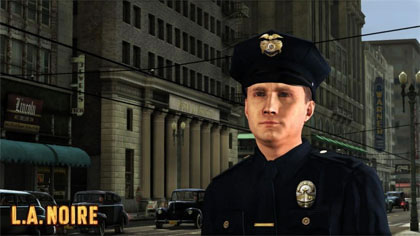
You don't have to be perfect with your interviews, the game is set up in such a way where the events will wrap around the clues you find and the answers you get. Even when I completely misread a person of interest, I was still able to find enough evidence to charge somebody with the crime. Sloppy police work results in more work that needs to be done, which is a really slick way of rewarding observant players. It's also impressive how many ways each case can play out. I found myself replaying certain missions several times just to make sure I saw and did everything.
Sometimes a case isn't nearly as open-and-shut as you would like. I found myself haunted by at least one case where I was sure I fingered the wrong man for the crime. It's not that I didn't have the evidence, but rather the equally compelling proof saying he didn't do it. It's rare for a simple game decision to stick with me days later, but it rattled me in a way that made me appreciate how difficult it is look somebody in the eyes and say they murdered somebody. I ended up replaying the case trying to find something (anything) that would soothe my guilty conscience.
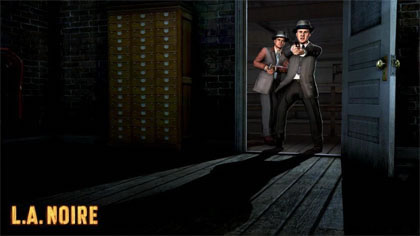
Don't worry; L.A. Noire is more than looking for clues and asking people questions. The game offers plenty of exhilarating car chases, shoot outs and other things you normally expect from a Grand Theft Auto sequel. In one mission you'll have to follow somebody without being noticed, while a few minutes later you'll run through the busy streets trying to apprehend a runaway perp. Even though I wouldn't classify this as an action game, there's certainly moments of edge-of-your-seat excitement.
When you're not digging for clues, Cole can help rid the city of simple street crimes. L.A. Noire comes packed with 40 side missions, all of which require no more a few minutes to complete. These are action-packed missions, giving players a nice change of pace from the standard investigation. Sadly these side missions aren't deep enough to be memorable, though I certainly enjoyed chasing down suspects with my car and pushing people off tall buildings.
But don't get too excited, because fast action and crazy car chases is not what L.A. Noire is all about. In fact, the game gives you an option to completely skip difficult action segments, getting you back to the real star of the show: Picking up clues and talking to people. On the other hand, I can't imagine anybody skipping some of the amazing set-pieces this game has in store for you. Seeing as this is Los Angeles, players will find themselves fighting through elaborate movie sets and other appropriate settings.
Unlike most Rockstar-published games, L.A. Noire strives for authenticity. I was struck by all of the familiar streets and sights, including a number of well-known Los Angeles landmarks. The attention to detail is staggering; it's clear that the developers spent years making sure everything was in the right spot. Better yet, the interiors are even more impressive. It's common for a house (no matter the size) to have a unique style. You can get lost in some of the Hollywood prop houses just looking at the hundreds of well-crafted objects. Oddly enough, some of the most impressive locations in this game are way off the beaten path.
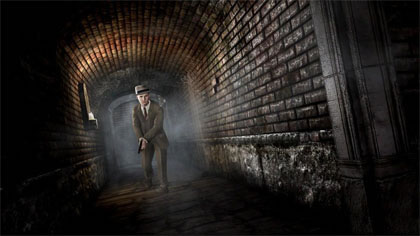
The game's linear structure will also be jarring for anybody expecting the usual Grand Theft Auto experience. Instead of picking up missions from multiple people, you are playing a group of cases in a set order. Once one case is closed, the next is immediately opened. Thankfully the game doesn't have a timer, so you'll be able to go fool around in the large sandbox world at just about any time. Also, after you've completed enough cases, you can go back into the game without any missions to worry about. You can drive up and down the streets of Los Angeles as you see fit, avoiding pedestrians and solving street crimes.
The 21 cases found in this three-disc package are diverse in a way I wasn't expecting. Because you are assigned to so many desks, you'll end up seeing quite a few different crimes. You'll go from a hit-and-run accident to tracking down a morally suspect Hollywood producer. In one inspired case you are forced to go from landmark to landmark looking for pieces of a famous poem ... and the killer. And just when you think you've seen it all, suddenly you're assigned to a house fire. While all of the cases are fun to play through, there are definitely a few that will stick with me long after I have stopped pretending to be a 1947 cop.
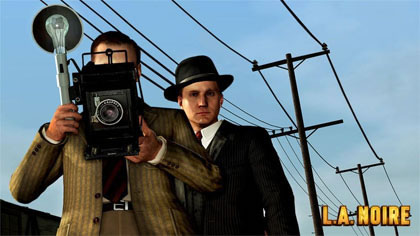
If it seems like I've been purposely avoiding the storyline, it's because I have. Outside of moving up through the ranks, anything I say would result in hundreds of angry letters about spoilers. What I can tell you is that each of the 21 cases are self-contained, though they all add up to a larger overarching narrative. The game is sewn together by two other story devices -- flash back sequences and newspaper headlines. These short cinemas help fill in the larger story, giving the player some useful information (though they may not know it at first). The end result is a fully realized story that digs deep into the mind of Cole Phelps.
Not enough can be said about the way the game looks. The technology used to capture the faces is unlike anything I've seen before. The visuals are so sharp that you can see the wrinkles in the forehead as characters emote. I was worried that the eerily lifelike characters would fall into the uncanny valley, the phenomenon where the more realistic something becomes the more fake it looks. That is certainly not the case with L.A. Noire, especially if you play the game in glorious black and white.
Although the game defaults to color, I implore you to take a few seconds and push the black and white button. This option not only sucks the unnecessary color out of the picture, but also adds a filter that heightens the contrast. In black and white the game resembles the movies and TV shows L.A. Noire is so clearly inspired by. What's more, it actually makes the character models and animations look better. It's not that the title looks bad using the default color scheme, however in black and white the whole thing feel otherworldly.
Beyond the impressive facial animations, I was blown away by the quality of acting. This isn't one of those games where there are only a few great actors; every single person does a stellar job. It doesn't hurt that the game employs half the cast of Mad Men, one of television's best dramas. Other notable stars include Greg Grunberg (Heroes), John Noble (Fringe) and Patrick Fischler (Lost) stealing the show as real-life gangster Mickey Cohen.
There is no perfect game and L.A. Noire is no exception. There are a few minor graphical glitches that pop-up from time to time ... literally. Like many sandbox games, some textures can lag behind the action. Every so often you'll see a large object appear out of nowhere, something GTA and Red Dead Redemption fans know all too well. I found that this was diminished some when I installed the game to the hard drive. There's also a recent patch that addresses a few of the graphical imperfections. While I definitely saw problems, I am happy to report that this is the Rockstar Games' least buggy sandbox game. None of the minor graphical problems hurt the overall experience.
The game feels a lot like other recent Rockstar Games titles, which is largely a good thing. As was the case with last year's Red Dead Redemption, it feels like there's some weight to the character. Cole doesn't turn on a dime, instead he moves around the screen realistically. He's also slower than most video game characters, even while in full sprint. And even though the cars are from the 1940s, I had no problem racing around the streets as if they had modern day tuning and suspension. If you hated the way Grand Theft Auto IV felt, then chances are L.A. Noire won't win you over.
Even if you never bother driving around the city goofing off, there's a solid 25 hours of gameplay to be had. I beat the 21 cases in around 20 hours and spent the next five mopping up the petty street crimes. The game has a surprising amount of replay value, since many players will want to see what other story branches they can experience in each case. The game ends in such a way that a second play through is almost required. Either way, you're getting a lot of game for $60.
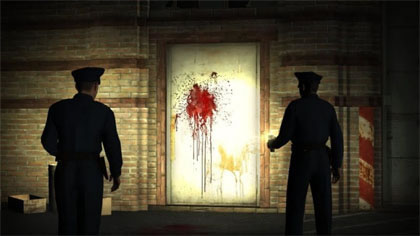
Best of all, you're getting an intelligent game that never once talks down to you. After it teaches you the basics, the training wheels come off and it's up to you to figure out what to do next. The game refuses to hold your hand, instead opting for audio cues and visual markers to get the point across. In GTA games there will be a dot telling you where to go at all time, but here you'll need to pay attention to your surroundings. Just finding what apartment door to knock on requires you to either ask somebody or check the mailboxes, the kinds of realistic things a real 1947 police officer would do. The game was confident that I would eventually get it, and I found that especially refreshing.
L.A. Noire is unlike anything I've ever played before. Sure it takes elements from other games (Grand Theft Auto, Phoenix Wright, etc.), but never before has a title managed to combine these things into something on this scale. It's hard to believe that somebody would spend seven years making what amounts to a graphic adventure, but I certainly appreciate the job Team Bondi put in. I have a hunch that L.A. Noire is going to be an incredibly influential game moving forward.
Capsule Review
L.A. Noire is an intelligent game with stellar acting, game changing technology and a cast of memorable characters. It's also Rockstar Games' most refined product, making it one of the best games this high profile company has ever published. If you're into solving crimes and police procedurals, then this game was made for you. Just remember to switch to black and white!
Staff Card



Disclaimer
This game was submitted by either the video game publisher or developer for review purposes. All games were reviewed on the hardware listed. For more questions and more information about Defunct Games' review policy, please send us an email HERE.
Recent Reviews






HOME |
CONTACT |
NOW HIRING |
WHAT IS DEFUNCT GAMES? |
NINTENDO SWITCH ONLINE |
RETRO-BIT PUBLISHING
Retro-Bit |
Switch Planet |
The Halcyon Show |
Same Name, Different Game |
Dragnix |
Press the Buttons
Game Zone Online | Hardcore Gamer | The Dreamcast Junkyard | Video Game Blogger
Dr Strife | Games For Lunch | Mondo Cool Cast | Boxed Pixels | Sega CD Universe | Gaming Trend
Game Zone Online | Hardcore Gamer | The Dreamcast Junkyard | Video Game Blogger
Dr Strife | Games For Lunch | Mondo Cool Cast | Boxed Pixels | Sega CD Universe | Gaming Trend
Copyright © 2001-2026 Defunct Games
All rights reserved. All trademarks are properties of their respective owners.
All rights reserved. All trademarks are properties of their respective owners.
