
- CLASSIC MAGAZINES
- REVIEW CREW
A show recapping what critics thought back
when classic games first came out! - NEXT GENERATION'S BEST & WORST
From the worst 1-star reviews to the best
5-stars can offer, this is Next Generation! - NINTENDO POWER (ARCHIVE)
Experience a variety of shows looking at the
often baffling history of Nintendo Power! - MAGAZINE RETROSPECTIVE
We're looking at the absolutely true history of
some of the most iconic game magazines ever! - SUPER PLAY'S TOP 600
The longest and most ambitious Super NES
countdown on the internet! - THEY SAID WHAT?
Debunking predictions and gossip found
in classic video game magazines! - NEXT GENERATION UNCOVERED
Cyril is back in this spin-off series, featuring the
cover critic review the art of Next Generation! - HARDCORE GAMER MAGAZING (PDF ISSUES)
Download all 36 issues of Hardcore Gamer
Magazine and relive the fun in PDF form!
- REVIEW CREW
- REVIEW ARCHIVE
- ELECTRONIC GAMING MONTHLY
- ELECTRONIC GAMING MONTHLY RANKS
From Mario to Sonic to Street Fighter, EGM
ranks classic game franchises and consoles! - ELECTRONIC GAMING MONTHLY BEST & WORST
Counting down EGM’s best and worst reviews
going year by year, from 1989 – 2009! - ELECTRONIC GAMING BEST & WORST AWARDS
11-part video series chronicling the ups and
downs of EGM’s Best & Worst Awards!
- ELECTRONIC GAMING MONTHLY RANKS
- GAME HISTORY
- GAME OVER: STORY BREAKDOWNS
Long-running series breaking down game
stories and analyzing their endings! - A BRIEF HISTORY OF GAMING w/ [NAME HERE]
Real history presented in a fun and pithy
format from a variety of game historians! - THE BLACK SHEEP
A series looking back at the black sheep
entries in popular game franchises! - INSTANT EXPERT
Everything you could possibly want to know
about a wide variety of gaming topics! - FREEZE FRAME
When something familiar happens in the games
industry, we're there to take a picture! - I'VE GOT YOUR NUMBER
Learn real video game history through a series
of number-themed episodes, starting at zero! - GREAT MOMENTS IN BAD ACTING
A joyous celebration of some of gaming's
absolute worst voice acting!
- GAME OVER: STORY BREAKDOWNS
- POPULAR SERIES
- DG NEWS w/ LORNE RISELEY
Newsman Lorne Riseley hosts a regular
series looking at the hottest gaming news! - REVIEW REWIND
Cyril replays a game he reviewed 10+ years
ago to see if he got it right or wrong! - ON-RUNNING FEUDS
Defunct Games' longest-running show, with
editorials, observations and other fun oddities! - DEFUNCT GAMES QUIZ (ARCHIVE)
From online quizzes to game shows, we're
putting your video game knowledge to the test!- QUIZ: ONLINE PASS
Take a weekly quiz to see how well you know
the news and current gaming events! - QUIZ: KNOW THE GAME
One-on-one quiz show where contestants
find out if they actually know classic games! - QUIZ: THE LEADERBOARD
Can you guess the game based on the classic
review? Find out with The Leaderboard!
- QUIZ: ONLINE PASS
- DEFUNCT GAMES VS.
Cyril and the Defunct Games staff isn't afraid
to choose their favorite games and more! - CYRIL READS WORLDS OF POWER
Defunct Games recreates classic game
novelizations through the audio book format!
- DG NEWS w/ LORNE RISELEY
- COMEDY
- GAME EXPECTANCY
How long will your favorite hero live? We crunch
the numbers in this series about dying! - VIDEO GAME ADVICE
Famous game characters answer real personal
advice questions with a humorous slant! - FAKE GAMES: GUERILLA SCRAPBOOK
A long-running series about fake games and
the people who love them (covers included)! - WORST GAME EVER
A contest that attempts to create the worst
video game ever made, complete with covers! - LEVEL 1 STORIES
Literature based on the first stages of some
of your favorite classic video games! - THE COVER CRITIC
One of Defunct Games' earliest shows, Cover
Critic digs up some of the worst box art ever! - COMMERCIAL BREAK
Take a trip through some of the best and
worst video game advertisements of all time! - COMIC BOOK MODS
You've never seen comics like this before.
A curious mix of rewritten video game comics!
- GAME EXPECTANCY
- FULL ARCHIVE
Mortal Kombat - Genesis vs. Super NES: 1990s Critics Pick the Winner

In this corner we have Mortal Kombat, the top-selling Genesis game that kept all of the blood and guts from the arcade hit. In the other corner we have Mortal Kombat, the Super NES version that was heavily edited to make it safe for all ages. This was one of the biggest gaming events of 1993, forcing gamers to make a hard decision between better graphics or uncensored gore. But what did the critics say 32 years ago? We know the Genesis version sold better, but did the critics prefer it over the Super NES? To answer that question, I decided to flip through the pages of Electronic Gaming Monthly, GamePro, Game Informer and more classic magazines that reviewed both of these fighting games back when they first came out. Today we're going to see where the critics landed and maybe, just maybe, settle this Mortal Kombat debate once and for all in this blood (and sweat) soaked episode of Magazine Match-Up.
Before we dive into the Mortal Kombat reviews, we first need to acknowledge the differences in the two versions. For those who did not grow up in the early 1990s, it's important to realize that Nintendo had a family-friendly reputation that they wanted to hold onto. With characters like Mario and Kirby, Nintendo was seen as safe, something that helped them dominate the 8-bit market in the 1980s. But this was the 1990s, and the kids that grew up on the Nintendo Entertainment System were now looking for something a bit edgier.
Enter Mortal Kombat, the arcade smash hit that you had to see to believe. With its over-the-top violence and gore, teenagers couldn't get enough of it, making a home console port a foregone conclusion. But what form would the port take? On the Genesis, gamers could punch in a code to activate all of the blood, guts and fatalities seen in the arcade original. However, over on the Super NES, things were a bit different. Nintendo would not budge when it came to the gruesome violence found in Mortal Kombat, forcing developer Sculptured Software to make a lot of cuts. The blood was replaced with what people affectionately called “sweat,” and many of the more brutal fatalities were changed to be less gory. For example, Scorpion could still light his opponent on fire, but it wasn't as clear what Kano was doing in his fatality.
So, with a very clear distinction between the Genesis version and the censored game on the Super NES, we're going to now check in with seven different magazines to see which version they liked the most.
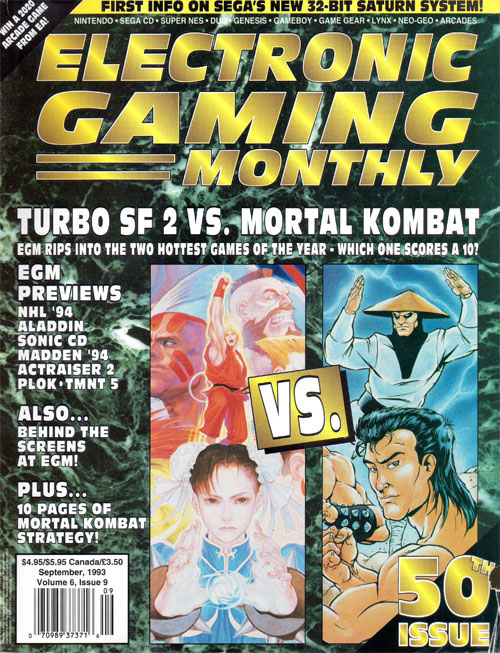
And we're going to start with Electronic Gaming Monthly, which reviewed both games in their fiftieth issue, the same issue where they reviewed Street Fighter II Turbo. When it comes to Mortal Kombat, neither version even came close to topping what Capcom was doing, but they still had a definitely preference. The Super NES version scored an average of 7.25 out of 10, with Martin pointing out Nintendo's questionable logic: “Okay, Big N, lets get this straight. You think it's okay to beat somebody up as long as they don't bleed? Some fatalities have even been toned down. Besides these little inconveniences, this is the best-looking translation of Mortal Kombat. The graphics and digitized voices are virtually identical to the arcade. The gameplay is fun, but not Street Fighter II.”
When it comes to the Genesis version, EGM definitely preferred the blood and gore. They gave this port an average score of 8.25 out of 10, a full point higher than the Super NES. “Hey, look! Blood! Mortal Kombat remains faithful having the arcade blood, but only with a code. I can live with that. This version is closer to the arcade game in gameplay than the Super NES, but falls short on graphics and sound, where some voices are missing. Playing with the 3-button controller is a pain, so buy a 6-button one.”
And with that, the Genesis has taken an early lead. EGM preferred the gore and gameplay to the sanitized sweat found on the Super NES. Let's see if GamePro agreed.
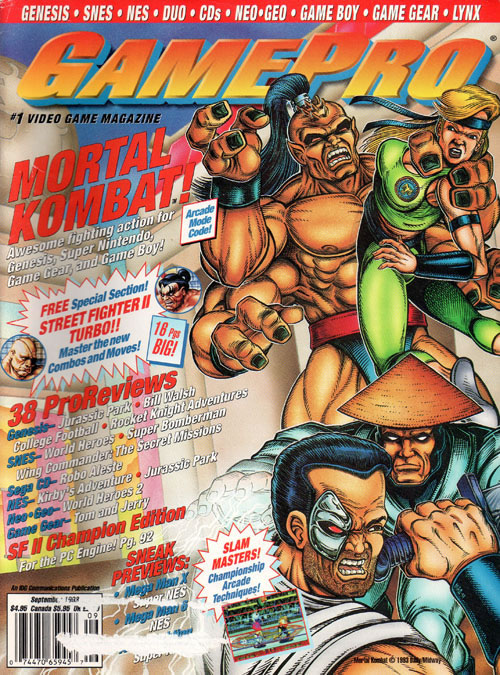
Although GamePro targeted a slightly younger audience than EGM, they still spent a lot of time hyping up Mortal Kombat. For this match-up, let's start with the Super NES version, which GamePro absolutely loved. Giving it a perfect 5 out of 5, they concluded that “finally, a game that could put other Fighters out on the Street. Despite some control glitches and the altered fatality moves, Mortal Kombat for the Super NES is a great representation of an arcade classic that will more than satisfy most gamers.”
With a perfect score in the books, you might think that the Super NES version has this match-up in the bag. But not so fast, because GamePro also gave the Genesis version a perfect 5 out of 5. “Genesis owners will be taunting Super NES owners with their cry of ‘no guts, no gory' when they get their hands on this brutal beat ‘em up. Although the graphics don't quite live up to those on the Super NES, the great gameplay and better control combined with the special Mode A option make the Genesis cart a winner.”
While it sure sounds like they prefer the Genesis version, we can only go based on the scores, and both games earned the same 5 out of 5. That means that we have a tie. Both games get a point. Next.

If GamePro was going for a younger audience, Electronic Games was doing the opposite. This was, after all, a resurrected version of the first video game magazine, complete with some of the same editors, including the Game Doctor himself, Bill Kunkel. That's who reviewed both the Genesis and Super NES versions of Mortal Kombat. It's worth noting that, unlike most of the other magazines, Electronic Games decided to review the two games together, though still gave each version a different score.
They concluded that “the task of bringing a game as elephantine as this to even the 16-bit video game universe is enormous, and both Probe and Sculptured Software deserve major kudos for jobs exceedingly well done. As for Acclaim, the days are over when competitors could laugh that, while it always snatched the best licenses, Acclaim never maximized their gaming potential. Mortal Kombat is a mortal lock to be among the best games produced on both the Genesis and Super NES in 1993.”
So, which version did they prefer? With a narrow difference of only four points, the Super NES version takes the win, as it picked up a score of 96%, while the Genesis port could only muster a 92%. As the review said, these are both great scores, but the censored version takes the victory. That ties the score up with two points each. Let's see who will break that tie and come out on top after a brief message from our sponsor.
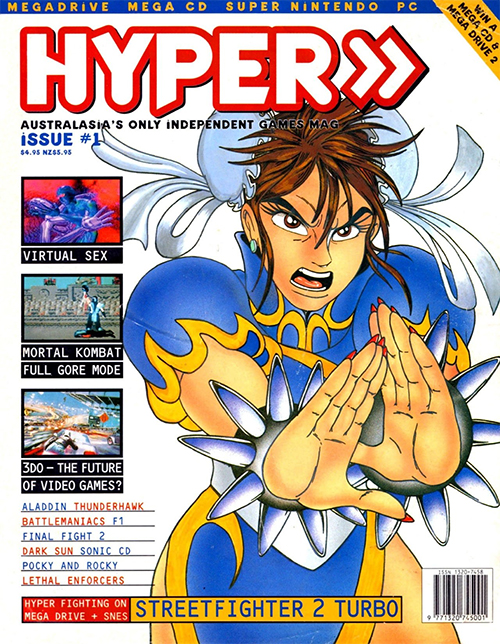
If you're looking for the closest score that didn't result in a tie, then we have to go all the way to Australia and check in with Hyper's very first issue. When they reviewed the two versions, there was only a one-point difference between the scores. They gave the Genesis version an 88%, noting that “the sprites are a bit smaller than the Super NES and some backgrounds are not as spunky.” They also liked the “fast, smooth” gameplay “with the same feel and timing as the arcade,” calling it a “great conversion of the arcade game. The blood is an extra special bonus.”
Like I said, this was a squeaker, but this time around the Super NES was on the wrong side of the divide. Giving the censored version an 87%, they praised the “faithful conversion of the arcade graphics,” noting that it's “brighter and with more depth than the Mega Drive.” That said, they called the gameplay “slightly sluggish and not quite as playable” as the Genesis version. “Nintendo were wimps for not allowing the blood. Thankfully, the game is good enough to do without it.”
While Hyper liked both, they ended up slightly preferring the Genesis version. That said, they didn't seem as annoyed by the lack of blood and gore as their American and European counterparts. We can figure out why later, because right now the Genesis version has a one-point lead.
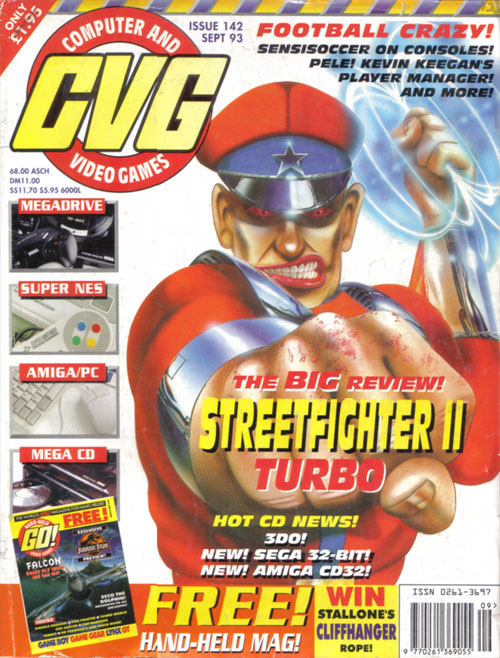
Speaking of European magazines, it was also a close call over at Computer & Video Games. When they reviewed the Genesis version, they gave it an impressive 90%, with Steve Keen raving that he “enjoyed Mortal Kombat even more than the arcade. A better job of this on Mega Drive could not have been done. Special praise to Acclaim, who've gone with the violence option in the wake of the Night Trap farce. Great music, classic killer special moves, brilliant effects and more options than an England football team manage could hope for. This is the most action-packed, responsive and downright fun Mega Drive beat ‘em up ever seen and will quite probably remain so for a very long time.”
I think we can all agree that 90% is an impressive score, but did the Super NES version do even better? No, it did not. In fact, it did four points worse, scoring an 86%. “Impressed as I was with the Mega Drive version's graphics, nothing prepared me for these! Super NES Kombat's graphics are almost arcade-perfect. The characters are massive, superbly rendered and excellently animated. Omitting the blood, though, was a major mistake. For me, the gory violence was the main attraction of the coin-op, and this version just doesn't have the same feel without it. At the end of the day, I'm sticking with the bloody, violent and depraved Mega Drive version.”
Based on what CVG wrote about both games, I would have expected there to be a bit more of a spread between scores. Either way, the Genesis takes another round, gaining a two-point lead over the Super NES. With only two more magazines to go, the best Nintendo can hope for is a tie.

It's worth mentioning that not all magazines were as quick to recommend both games. Die Hard Game Fan, for example, definitely liked one version of Mortal Kombat over the original. They gave the Genesis version an average score of 87%, with K. Lee calling it “Excellent! Acclaim has a winner on their hands with Mortal Kombat. Fans of the arcade should be happy with the Genesis version; all of the fatalities are here and there is some blood. This is one of the better arcade to home translations so far and the special moves are very easy to pull off, perhaps easier than the arcade. Buy it!”
Unfortunately, the tone wasn't nearly as positive and upbeat when talking about the Super NES version. They gave it an average score of just 77%, a ten-point drop from the Genesis version. “Maybe this game should have been named Moral Kombat because of all the controversy regarding the fatality moves. The Super NES version is a good translation with great digitized graphics and almost all the arcade voice, but the movement is kind of choppy and the primary reason you played the game in the arcade is gone.”
Look, I'm not going to sugarcoat this – things are looking bad for the Super NES. Perhaps this is what you expected, but with the Genesis version taking a commanding three-point lead, there's no way for the Super NES game to catch up. Let's see if Game Informer lessens the bleeding or just makes the injury worse.

I won't keep you in suspense – Game Informer is definitely here to make things worse for the Super NES. In fact, with the Genesis version earning a 9.25 out of 10 and the Super NES port getting a much lower 7.75 out of 10, this is easily one of the biggest spreads between the two consoles. Let's just get the Super NES version out of the way. Paul, the Pro Player, gave the game a pitiful 6.75 and complained that “this version went through the censors at Nintendo and lost some of what made it popular in the arcades. Sorry, no blood or fatalities. Even without, Mortal Kombat has smooth animation and arcade-like backgrounds. The voice samples make the whole graphics and sound package great. Regrettably, the play is a bit sluggish and control is tough; special moves take too much time to execute. I think big fans of the arcade might be disappointed.”
Yeah, I think that's an understatement. When Andy, the Game Hombre, reviewed the Genesis version, he gave it a 9.25 out of 10 and exclaimed: “Blood, guts and death; I love it! The digitized characters look and move just like the arcade. Okay, maybe not the arcade, but it's close. I wish they had more digitized voices, but I'm not complaining. The control is excellent, but not quite like the arcade. Once you get used to the subtle changes, the game plays like a champ. While everyone may not be able to stomach it, Mortal Kombat has some great features that make it unique in the fighting genre.”
And there we have it, a final score of 6 – 2, with the Genesis version handily taking the victory. This really was a blood bath. And, to be honest, I knew it would be going in. I figured that maybe one or two magazines would be generous and give the games a tie, but I doubted any would prefer the Super NES version. As it turns out, Electronic Games was the only magazine to side with Nintendo's platform, even if it was only by a few percentage points.
But don't worry, Nintendo fans, you eventually had the last laugh. When Mortal Kombat II hit home consoles, Nintendo relented and allowed all the blood and gore. As a result, the critics ended up preferring that version of the game over the one found on the Genesis. But that's a story for another day.
Before we dive into the Mortal Kombat reviews, we first need to acknowledge the differences in the two versions. For those who did not grow up in the early 1990s, it's important to realize that Nintendo had a family-friendly reputation that they wanted to hold onto. With characters like Mario and Kirby, Nintendo was seen as safe, something that helped them dominate the 8-bit market in the 1980s. But this was the 1990s, and the kids that grew up on the Nintendo Entertainment System were now looking for something a bit edgier.
Enter Mortal Kombat, the arcade smash hit that you had to see to believe. With its over-the-top violence and gore, teenagers couldn't get enough of it, making a home console port a foregone conclusion. But what form would the port take? On the Genesis, gamers could punch in a code to activate all of the blood, guts and fatalities seen in the arcade original. However, over on the Super NES, things were a bit different. Nintendo would not budge when it came to the gruesome violence found in Mortal Kombat, forcing developer Sculptured Software to make a lot of cuts. The blood was replaced with what people affectionately called “sweat,” and many of the more brutal fatalities were changed to be less gory. For example, Scorpion could still light his opponent on fire, but it wasn't as clear what Kano was doing in his fatality.
So, with a very clear distinction between the Genesis version and the censored game on the Super NES, we're going to now check in with seven different magazines to see which version they liked the most.
Electronic Gaming Monthly
United States
Winner: Mortal Kombat (Genesis)
| Publication | Scores |
|---|---|
| Mortal Kombat (Genesis) | 8.25/10 |
| Mortal Kombat (Super NES) | 7.25/10 |
When it comes to the Genesis version, EGM definitely preferred the blood and gore. They gave this port an average score of 8.25 out of 10, a full point higher than the Super NES. “Hey, look! Blood! Mortal Kombat remains faithful having the arcade blood, but only with a code. I can live with that. This version is closer to the arcade game in gameplay than the Super NES, but falls short on graphics and sound, where some voices are missing. Playing with the 3-button controller is a pain, so buy a 6-button one.”
And with that, the Genesis has taken an early lead. EGM preferred the gore and gameplay to the sanitized sweat found on the Super NES. Let's see if GamePro agreed.
GamePro
United States
Winner: Tie
| Publication | Scores |
|---|---|
| Mortal Kombat (Genesis) | 5/5 |
| Mortal Kombat (Super NES) | 5/5 |
With a perfect score in the books, you might think that the Super NES version has this match-up in the bag. But not so fast, because GamePro also gave the Genesis version a perfect 5 out of 5. “Genesis owners will be taunting Super NES owners with their cry of ‘no guts, no gory' when they get their hands on this brutal beat ‘em up. Although the graphics don't quite live up to those on the Super NES, the great gameplay and better control combined with the special Mode A option make the Genesis cart a winner.”
While it sure sounds like they prefer the Genesis version, we can only go based on the scores, and both games earned the same 5 out of 5. That means that we have a tie. Both games get a point. Next.
Electronic Games
United States
Winner: Mortal Kombat (Super NES)
| Publication | Scores |
|---|---|
| Mortal Kombat (Genesis) | 92% |
| Mortal Kombat (Super NES) | 96% |
They concluded that “the task of bringing a game as elephantine as this to even the 16-bit video game universe is enormous, and both Probe and Sculptured Software deserve major kudos for jobs exceedingly well done. As for Acclaim, the days are over when competitors could laugh that, while it always snatched the best licenses, Acclaim never maximized their gaming potential. Mortal Kombat is a mortal lock to be among the best games produced on both the Genesis and Super NES in 1993.”
So, which version did they prefer? With a narrow difference of only four points, the Super NES version takes the win, as it picked up a score of 96%, while the Genesis port could only muster a 92%. As the review said, these are both great scores, but the censored version takes the victory. That ties the score up with two points each. Let's see who will break that tie and come out on top after a brief message from our sponsor.
Hyper
Australia
Winner: Mortal Kombat (Genesis)
| Publication | Scores |
|---|---|
| Mortal Kombat (Genesis) | 88% |
| Mortal Kombat (Super NES) | 87% |
Like I said, this was a squeaker, but this time around the Super NES was on the wrong side of the divide. Giving the censored version an 87%, they praised the “faithful conversion of the arcade graphics,” noting that it's “brighter and with more depth than the Mega Drive.” That said, they called the gameplay “slightly sluggish and not quite as playable” as the Genesis version. “Nintendo were wimps for not allowing the blood. Thankfully, the game is good enough to do without it.”
While Hyper liked both, they ended up slightly preferring the Genesis version. That said, they didn't seem as annoyed by the lack of blood and gore as their American and European counterparts. We can figure out why later, because right now the Genesis version has a one-point lead.
Computer & Video Games
United Kingdom
Winner: Mortal Kombat (Genesis)
| Publication | Scores |
|---|---|
| Mortal Kombat (Genesis) | 90% |
| Mortal Kombat (Super NES) | 86% |
I think we can all agree that 90% is an impressive score, but did the Super NES version do even better? No, it did not. In fact, it did four points worse, scoring an 86%. “Impressed as I was with the Mega Drive version's graphics, nothing prepared me for these! Super NES Kombat's graphics are almost arcade-perfect. The characters are massive, superbly rendered and excellently animated. Omitting the blood, though, was a major mistake. For me, the gory violence was the main attraction of the coin-op, and this version just doesn't have the same feel without it. At the end of the day, I'm sticking with the bloody, violent and depraved Mega Drive version.”
Based on what CVG wrote about both games, I would have expected there to be a bit more of a spread between scores. Either way, the Genesis takes another round, gaining a two-point lead over the Super NES. With only two more magazines to go, the best Nintendo can hope for is a tie.
Die Hard Game Fan
United States
Winner: Mortal Kombat (Genesis)
| Publication | Scores |
|---|---|
| Mortal Kombat (Genesis) | 87% |
| Mortal Kombat (Super NES) | 77% |
Unfortunately, the tone wasn't nearly as positive and upbeat when talking about the Super NES version. They gave it an average score of just 77%, a ten-point drop from the Genesis version. “Maybe this game should have been named Moral Kombat because of all the controversy regarding the fatality moves. The Super NES version is a good translation with great digitized graphics and almost all the arcade voice, but the movement is kind of choppy and the primary reason you played the game in the arcade is gone.”
Look, I'm not going to sugarcoat this – things are looking bad for the Super NES. Perhaps this is what you expected, but with the Genesis version taking a commanding three-point lead, there's no way for the Super NES game to catch up. Let's see if Game Informer lessens the bleeding or just makes the injury worse.
Game Informer
United States
Winner: Mortal Kombat (Genesis)
| Publication | Scores |
|---|---|
| Mortal Kombat (Genesis) | 9.25/10 |
| Mortal Kombat (Super NES) | 7.75/10 |
Yeah, I think that's an understatement. When Andy, the Game Hombre, reviewed the Genesis version, he gave it a 9.25 out of 10 and exclaimed: “Blood, guts and death; I love it! The digitized characters look and move just like the arcade. Okay, maybe not the arcade, but it's close. I wish they had more digitized voices, but I'm not complaining. The control is excellent, but not quite like the arcade. Once you get used to the subtle changes, the game plays like a champ. While everyone may not be able to stomach it, Mortal Kombat has some great features that make it unique in the fighting genre.”
And there we have it, a final score of 6 – 2, with the Genesis version handily taking the victory. This really was a blood bath. And, to be honest, I knew it would be going in. I figured that maybe one or two magazines would be generous and give the games a tie, but I doubted any would prefer the Super NES version. As it turns out, Electronic Games was the only magazine to side with Nintendo's platform, even if it was only by a few percentage points.
But don't worry, Nintendo fans, you eventually had the last laugh. When Mortal Kombat II hit home consoles, Nintendo relented and allowed all the blood and gore. As a result, the critics ended up preferring that version of the game over the one found on the Genesis. But that's a story for another day.

Even More Articles

REVIEW - Finding Polka
August 13th, 2026

REVIEW - Agent 64: Spies Never Die
August 12th, 2026

REVIEW - Kusan: City of Wolves
August 10th, 2026

REVIEW - K-Pop Idol Stories: Road to Debut
July 30th, 2026

REVIEW - Dragon Dragon Fire Fire Deluxe
July 28th, 2026
Must-See Videos




Latest Reviews
View all


HOME |
CONTACT |
NOW HIRING |
WHAT IS DEFUNCT GAMES? |
NINTENDO SWITCH ONLINE |
RETRO-BIT PUBLISHING
Retro-Bit |
Switch Planet |
The Halcyon Show |
Same Name, Different Game |
Dragnix |
Press the Buttons
Game Zone Online | Hardcore Gamer | The Dreamcast Junkyard | Video Game Blogger
Dr Strife | Games For Lunch | Mondo Cool Cast | Boxed Pixels | Sega CD Universe | Gaming Trend
Game Zone Online | Hardcore Gamer | The Dreamcast Junkyard | Video Game Blogger
Dr Strife | Games For Lunch | Mondo Cool Cast | Boxed Pixels | Sega CD Universe | Gaming Trend
Copyright © 2001-2026 Defunct Games
All rights reserved. All trademarks are properties of their respective owners.
All rights reserved. All trademarks are properties of their respective owners.
